|
Making his big-screen debut in The Super Mario Galaxy Movie, Yoshi, the adorable Munchakoopa that might as well be considered the third Mario brother, has been a major highlight of the Super Mario Bros. 40th anniversary. While fans continue waiting for Mario’s unannounced but undoubtedly in-development next 3D adventure, Yoshi is back to hold us over with his loveable charm in another 2D platforming adventure of his own. Following up the cozy feel-good titles Yoshi’s Woolly World (2015) and Yoshi’s Crafted World (2019), developer Good-Feel is now turning the page to Yoshi and the Mysterious Book on Nintendo Switch 2, flipping the script with a new visual aesthetic and gameplay style. But is the Mysterious Book worth diving into, or is Yoshi not strong enough to carry the weight of such an important anniversary on his back?
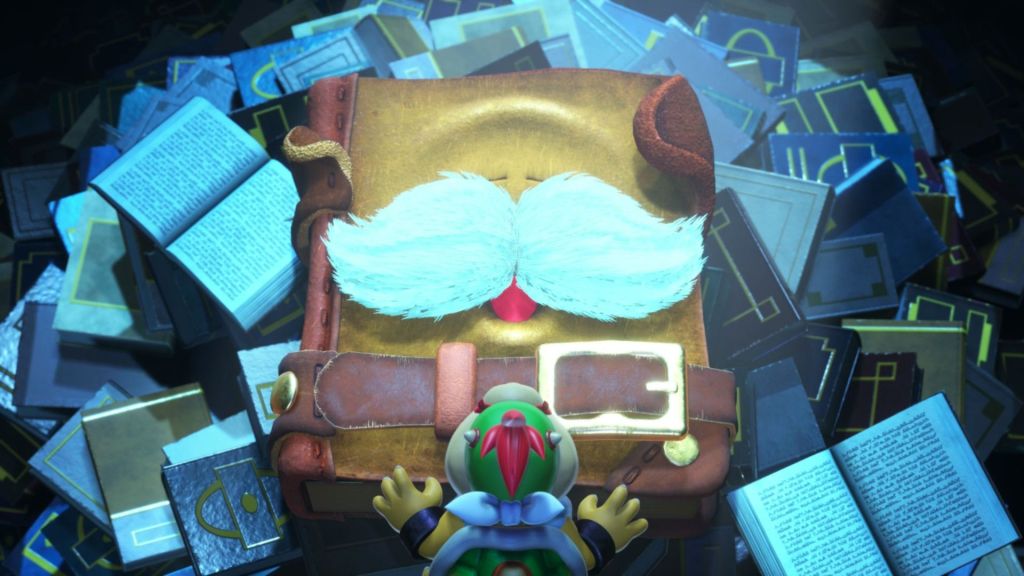
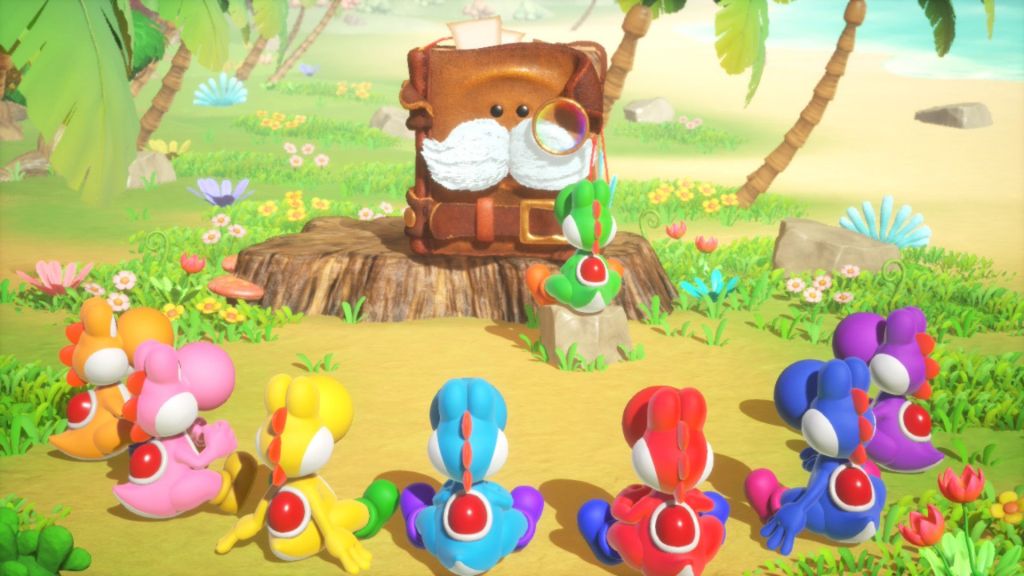
When Bowser Jr. (not to be mistaken for Baby Bowser like in previous Yoshi games) stumbles across a giant mustache-welding book inside the library of Bowser’s Castle, he opens it up to find a map that leads to none other than Yoshi’s Island. Just before arriving there, and likely up to his usual antics, he gets magically transported into the pages by looking at it through a looking glass, causing his clown car, and the book itself, to crash land onto the island’s beach. A group of Yoshi (Yoshis?) all of different colors, that you can choose between as your playable character, scurries over to find out what the commotion is about. The mysterious book, who we find out is named Mr. E (short for Encyclopedia), wakes up to reveal his sentience to the Yoshis, asking them to explore his pages and help make new discoveries about the creatures within by using the same magic magnifying glass King Koopa’s son used a few moments before.
|
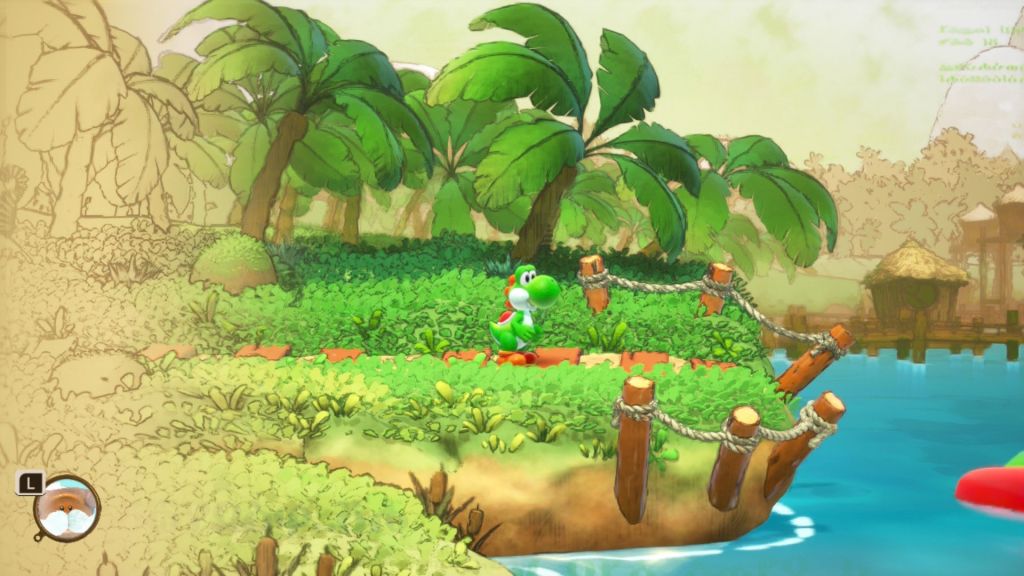
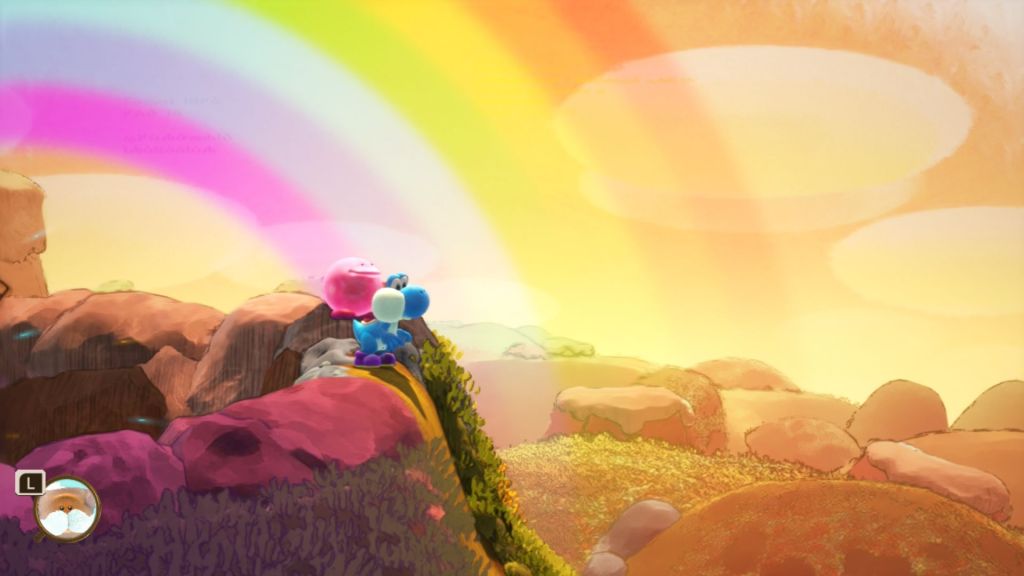
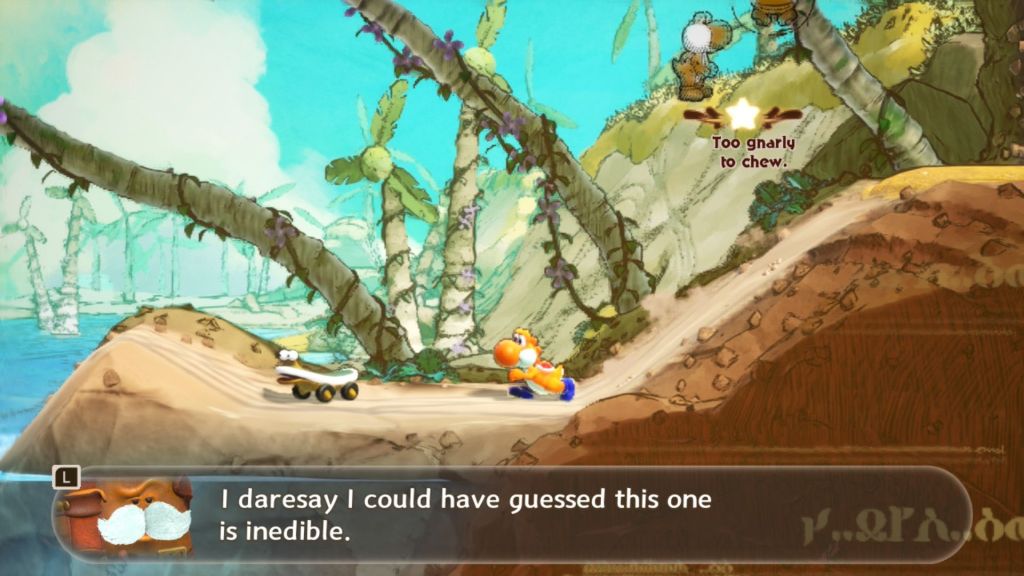
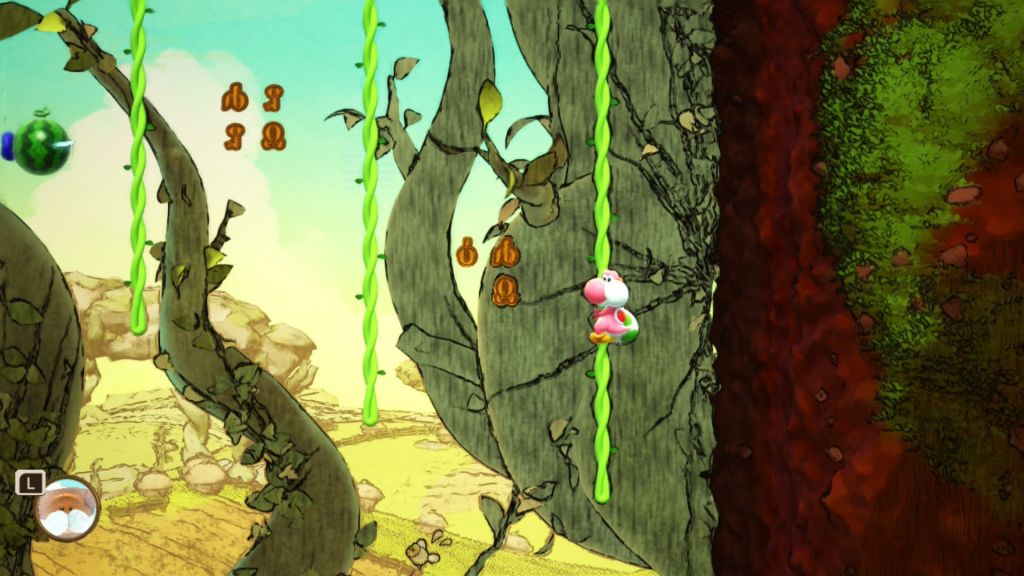
The few cutscenes that are present, as well as the home menu area on Yoshi’s Island where you navigate Mr. E’s pages to enter new levels, are rendered in a 3D art style. Well-animated, though simplistic, the 3D segments aren’t much of a technical showcase outside of some texture and lighting effects that wouldn’t have been possible on the original Switch, with the highlight of visual splendor actually coming from the 2D platforming gameplay itself, from inside the book. Inspired by classic picture book illustrations, Yoshi and the Mysterious Book uses the power of Unreal Engine and Nintendo Switch 2 to simulate a beautifully hand-drawn style. Running in 4K resolution docked and a smooth 60fps, there are intentional exceptions of lower framerates, such as the movements of characters, to give the appearance of genuine stop-motion/claymation with 2.5D graphical techniques. Going from being made of wool to felt, coloured pencils was a logical evolution for Yoshi, and the result is stunning.
Ironically, for a game where the main supporting character is literally a talking book, there isn’t much narrative depth. However, while this may be disappointing for some, it has just the right amount of plot to string things along for a more casual title of this genre, with an obvious focus on gameplay and enough neat references and Mario-lore tidbits to please the most dedicated fans.
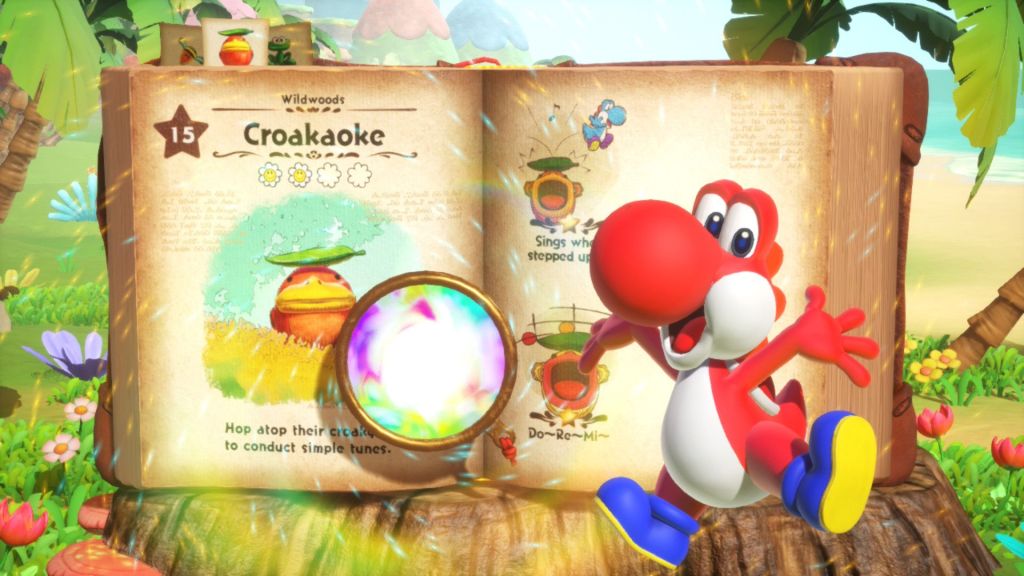
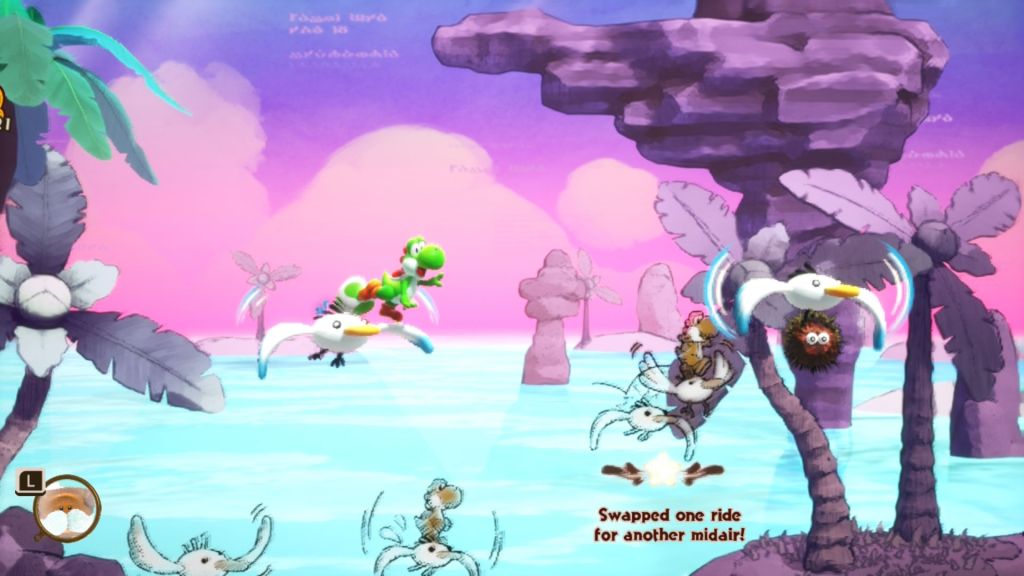
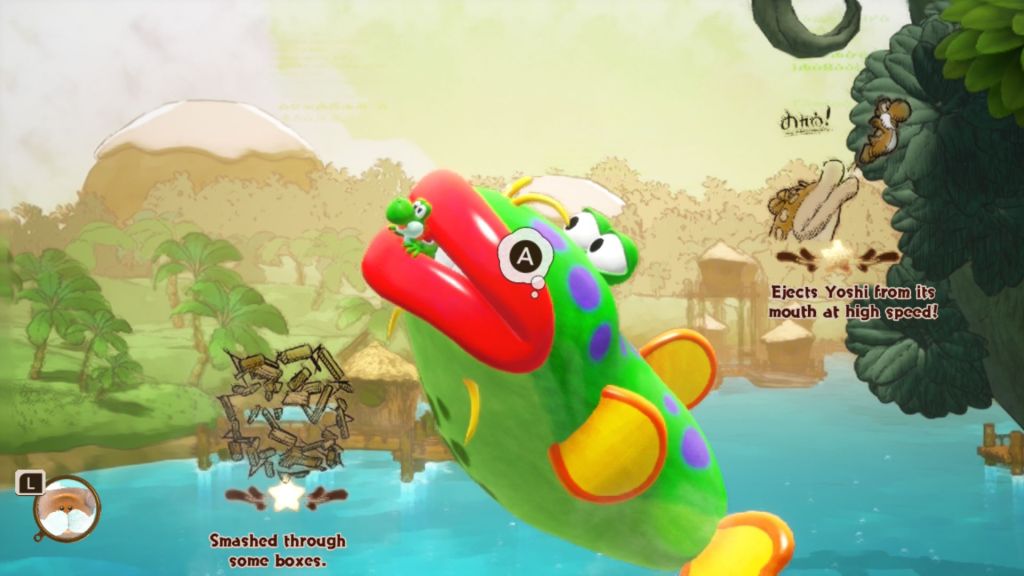
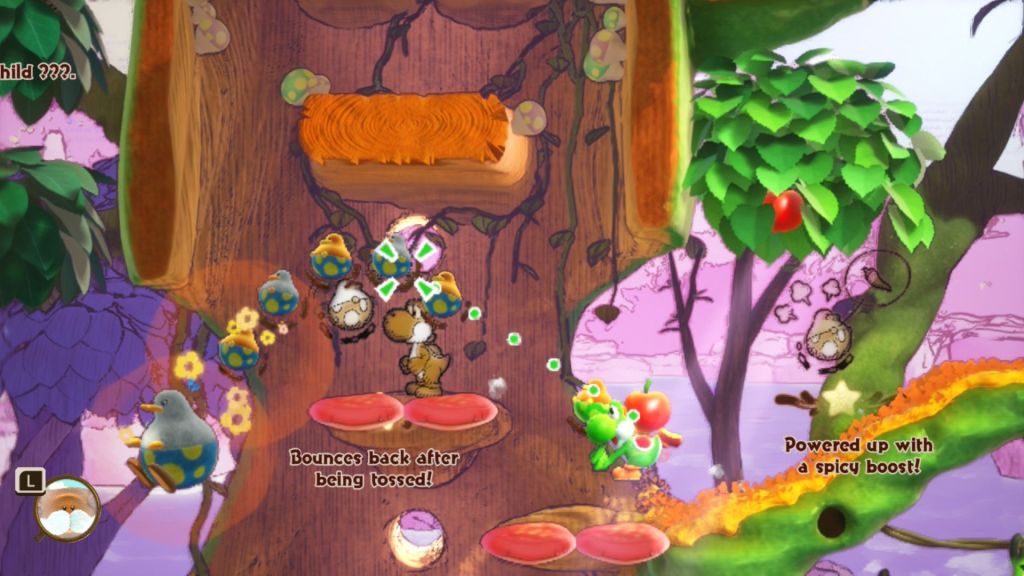
Creatures fundamentally act as levels, whereas Chapters are separate areas; the stand-in for Worlds in this game. For example, Chapter 3: Seaside has unique beach related creatures to discover, while Chapter 5: Bug Country has creatures that more resemble insects and even plants. When you select one of the creatures within the chapters of Mr. E, you’ll be transported to a new stage designed around the unique mechanics of it. Each of these mechanics, like bouncing on the head of a duck-like creature to play musical notes, riding the waves on a living surfboard, swinging between platforms with the webs of a spider, or gliding through the air on an umbrella-shaped bird, just to name a few, are delightfully engaging, so much so that many of them could work as the basis for an entire game of its own. Stages can also feature multiple creatures, allowing you to make new discoveries in regards to how they interact with each other, even if you already completed their dedicated stage.
|
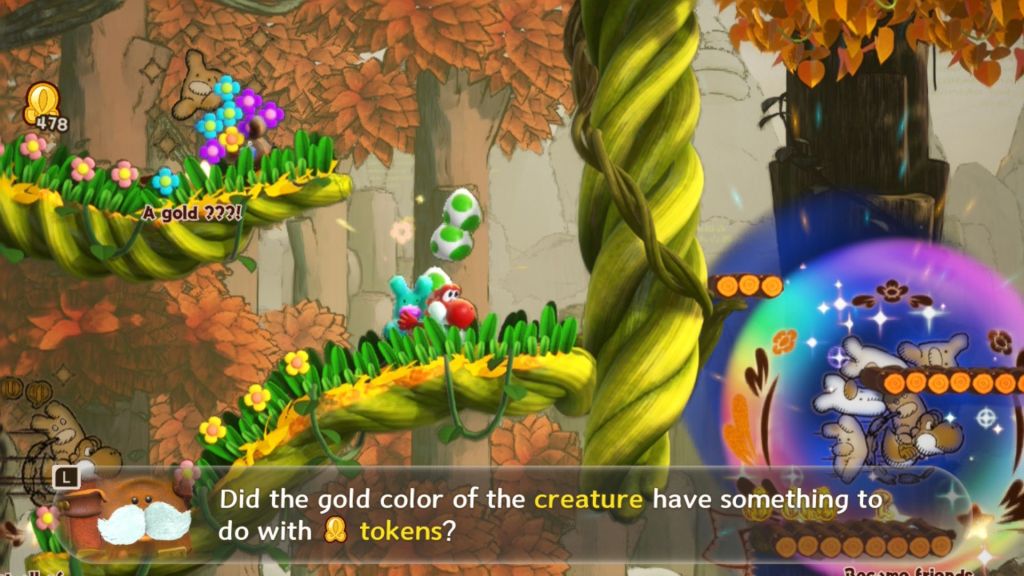
Within the stages, Yoshi is equipped with his standard moveset: run, jump, flutter jump, crouch, tail flick, gobble (extend his tongue to eat enemies and either spit them back out or turn them into an egg), and of course, egg toss. You’d be surprised just how many discoveries can be made about each creature using just these simple actions, especially when you take into account the creatures’ own unique abilities. When a discovery is made, a star will be granted, and a stamp will be placed in the book, as well as permanently within the stage; in the background where it was found.
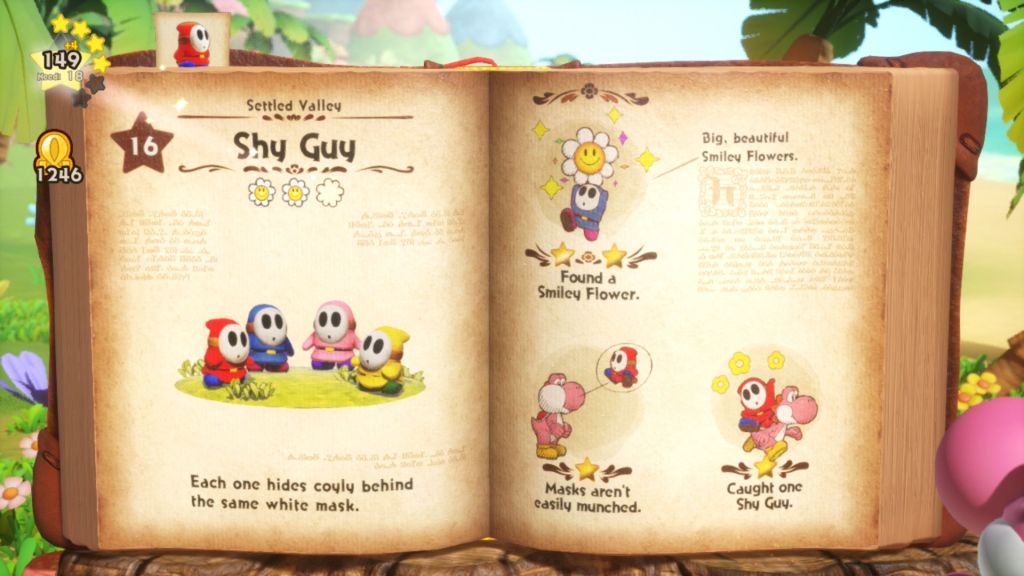
Earning enough stars unlocks new chapters, and completing a stage unlocks more creatures to discover within its respective chapter. The amount of discoveries, and therefore stars, are plentiful, ranging from being as simple as how the creature tastes to finding exactly what it’s capable of, so it’s possible to move on to the next chapter long before the current one has been fully explored. Discoveries you haven’t made yet, depicted as silhouettes in the main menu book, can be “predicted” by spending the plentiful tokens you collect throughout the stages, giving you its name as a clue, or furthermore, an additional hint for more tokens. But these are worth avoiding if you want to give yourself more of a challenge.
Unlike most platformers, stages aren’t designed to be completely linear, but more as a side-scrolling sandbox, as there’s no physical goal or flagpole at the end of the stage. You can fall into a pit and instantly respawn nearby, and if you fail a discovery that involves a unique challenge like a race, you might have to retry, but there are no lives, health counters, or even a timer to worry about. This casual, relaxed style of gameplay fits the vibe of the game perfectly, and though it may sound too easy, some discoveries require surprisingly thoughtful puzzle-solving, and the iconic Smiley Flower collectables make their return, some of which are very well-hidden. There’s also a main discovery to be made about each creature that’s worth three stars, giving an objective to keep exploration on track, which includes boss battles between Bowser Jr. and Kamek (who we learn has also been trapped inside the book) at the end of the final creature’s stage from each chapter. Fun and thrilling but ultimately anticlimactic due to the inability to Game Over, boss battles are the only real instances I wish there was more difficulty.
Stages can be exited and swapped between at any time, saving your progress and discoveries, but only after the three star objective is complete will you be prompted to name the associated creature. Mr. E can also give you his own suggestion for a more “canon” name if you’re drawing a blank. It’s hard to look at familiar species, like Shy Guys, as anything else, but most of the other creatures are brand new to the Yoshi-verse, so why not let your imagination run wild?
|
As much as I love some good couch co-op, it’s actually refreshing to see a game of this caliber focus exclusively on the single-player experience. Stages have been designed without having to accommodate for multiple players, and though other platformers might throw in a co-op mode anyway as an afterthought since most of the stages would probably function just fine with multiplayer, I have no problem with the route Nintendo decided to take here. All resources were put into developing the main campaign, and it’s clear a lot of love was put into every aspect.
The closest thing to another mode at all is the Exploration Tools, where you can use the Smiley Flowers you’ve collected to unlock tools you can add as overlays to the border of the screen as you explore stages. These can be quite helpful, like a radar that leads you towards a point of interest, such as the location of a Smiley Flower, or virtually useless, like a Life Gauge for Yoshi that can’t be fully depleted. Some can be interesting to test out, like the speedometer, thermometer, or scale, but ultimately I decided not to use any of the tools for my main playthrough, as not only can they take away from some of the challenge of finding secrets, I personally wanted to avoid UI clutter to have the best possible view of the environments.
Yoshi and the Mysterious Book reimagines what it means to be a 2D side-scrolling platformer, focusing on exploration and experimentation rather than reaching a singular goalpost; further differentiating itself from the Super Mario Bros. series without fully reinventing the genre. With every stage introducing a new type of creature that has their own set of cutely creative and engaging gameplay mechanics, most of the difficulty comes in the form of finding well-hidden secrets, making the game accessible for all ages. The gorgeous art direction makes every frame look like an illustration ripped straight out of a children’s book, but the gameplay doesn’t feel like it was developed exclusively for a younger audience, as long as there’s still a little whimsy in your heart.
8.5/10
A copy of Yoshi and the Mysterious Book for review purposes was provided by Nintendo UK
|
|
|
|
|







0 Comments:
Post a Comment